

Chimney Repairs in Wombourne
Chimney stacks repointed, rebuilt and flashed in properly by a team that does the brickwork and the roofing, not one or the other. About seven miles south of our base.
Chimney Repairs for Homes in Wombourne
Wombourne’s detached houses often carry larger chimneys than the city norm, wide stacks with multiple flues serving fireplaces the house was designed around, and many are back in use now wood burners have returned. A working stack needs its joints, flaunching and pots genuinely sound, not just presentable from the drive.
We cover Wombourne and the surrounding area: The Village core, Ounsdale, Blakeley, Giggetty, Bratch and beyond (WV5).
Get a Free Wombourne Quote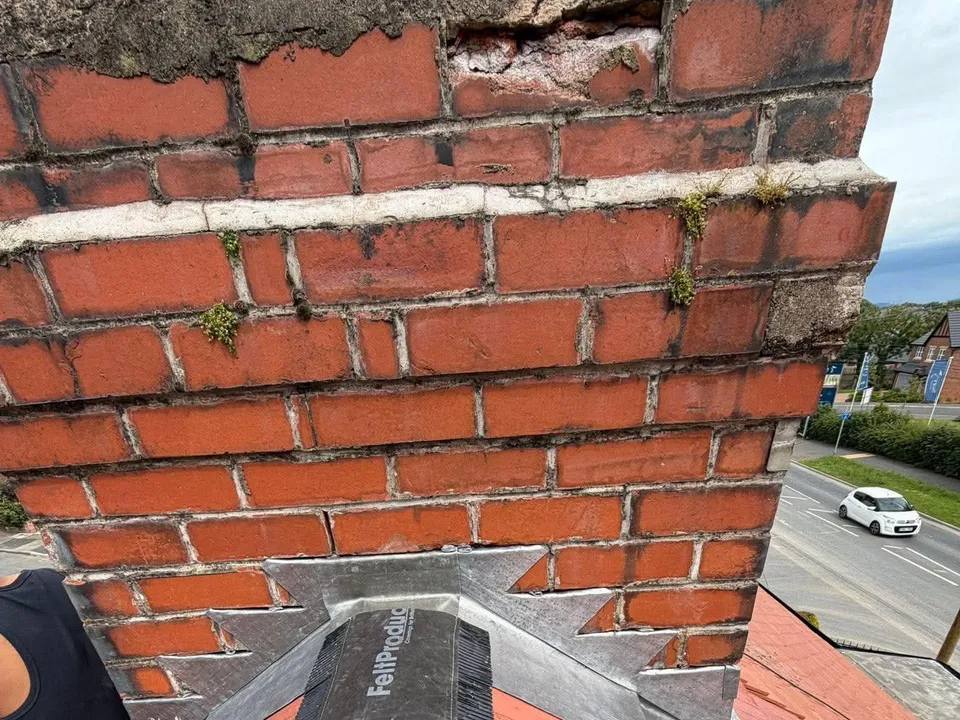
What’s Included
We repoint and rebuild these bigger stacks, recast flaunching around multiple pots, renew the lead aprons and soakers where broad stacks meet the tile, and cap the flues that are retired. On the village’s older core near the green, softer mortars get used to match the age of the brick.
- Stacks repointed with the right mortar mix
- Full and partial chimney rebuilds in matching brick
- Lead flashing and soakers renewed, dressed into the joints
- Flaunching recast, pots reset, cowls and caps fitted
- Disused chimneys removed and tiled over
- Roofer and bricklayer on the same scaffold
How It Works
Chimney Repairs in Wombourne, FAQs
Bigger than a slim stack but the same disciplines, more flaunching, more pots, a wider lead apron. Multi-flue stacks are standard on Wombourne’s detached houses and we price them from a proper look rather than a guess from the ground.
It raises the stakes, a working flue puts heat and gases through the stack again, so joints and flaunching that could slumber on a dead chimney now matter. We make the outside sound; the liner and stove connection belong to your HETAS installer, and we are clear about that boundary.
From the ground, look for gaps and shadows in the mortar joints, white staining, or a stack that reads crooked against the sky. Inside, damp patches on the chimney breast are the big tell. Binoculars from the garden will tell you a lot, and we will confirm properly from a ladder or scaffold.
It can be. Stacks lean when the mortar on the weather side wears faster, and a badly leaning stack in wind is a genuine risk to whatever is below. If yours has a visible lean, get it looked at soon. Making it safe is quick; rebuilding it is planned work, not an emergency, if caught early.
Usually the lead. Flashing that has split, lifted or been bodged with mastic lets water straight in at the joint between stack and roof. Cracked flaunching on top does the same. Both are standard fixes for us, and we check all three, brick, flaunching and lead, whenever we look at a leaking chimney.