

Chimney Repairs in Perton
Chimney stacks repointed, rebuilt and flashed in properly by a team that does the brickwork and the roofing, not one or the other. A short run west of Wolverhampton.
Chimney Repairs for Homes in Perton
Perton is light on chimneys, much of the estate was built all-electric or gas-fired without traditional stacks, but the designs that have them carry slim brick stacks that are now fifty years into the weather. The work is compact: repointing, recasting the flaunching, and capping flues that have never seen a fire in decades.
We cover Perton and the surrounding area: The Parkway, Gainsborough Drive area, Sandown Drive area, Wrottesley edge, Pattingham Road side and beyond (WV6).
Get a Free Perton Quote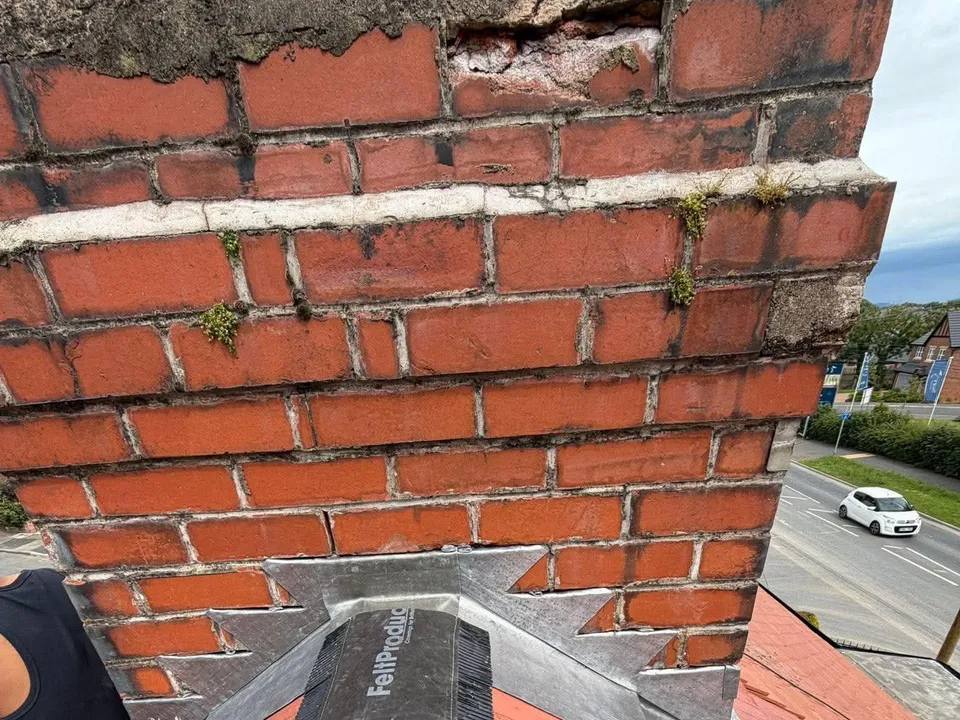
What’s Included
Because these stacks are small, the wind matters more than the size, an exposed Perton stack with open joints loosens faster than a bigger sheltered one. A repoint and cap while the ladder is up is cheap insurance against the bedroom-ceiling stain that failed stacks always produce eventually.
- Stacks repointed with the right mortar mix
- Full and partial chimney rebuilds in matching brick
- Lead flashing and soakers renewed, dressed into the joints
- Flaunching recast, pots reset, cowls and caps fitted
- Disused chimneys removed and tiled over
- Roofer and bricklayer on the same scaffold
How It Works
Chimney Repairs in Perton, FAQs
Give it a cap and a check of its joints, that is normally all these slim estate stacks need to stay healthy for another decade. It is a small job and we usually combine it with other work to keep the cost down.
Yes, size does not protect it, an open joint or cracked flaunching lets water into the stack and it tracks down into the ceiling below just like on a big terrace stack. The fix is smaller and cheaper though, which is the good news.
From the ground, look for gaps and shadows in the mortar joints, white staining, or a stack that reads crooked against the sky. Inside, damp patches on the chimney breast are the big tell. Binoculars from the garden will tell you a lot, and we will confirm properly from a ladder or scaffold.
It can be. Stacks lean when the mortar on the weather side wears faster, and a badly leaning stack in wind is a genuine risk to whatever is below. If yours has a visible lean, get it looked at soon. Making it safe is quick; rebuilding it is planned work, not an emergency, if caught early.
Usually the lead. Flashing that has split, lifted or been bodged with mastic lets water straight in at the joint between stack and roof. Cracked flaunching on top does the same. Both are standard fixes for us, and we check all three, brick, flaunching and lead, whenever we look at a leaking chimney.