

New Roofs & Re-Roofing in the West Midlands
Full re-roofs done properly: stripped to the timbers, new membrane and battens, tiles or slates laid straight, dry ridge as standard.
New Roofs & Re-Roofing
A roof only needs replacing once in most people’s time in a house, so it is worth doing right. The signs it is due are usually underneath, not on top: felt that has gone brittle and torn under the tiles, nails rusted through so tiles keep slipping, or repairs turning up so often that the roof is costing more to patch than it would to sort. When we survey a roof we look at all of that and tell you honestly which side of the line you are on.
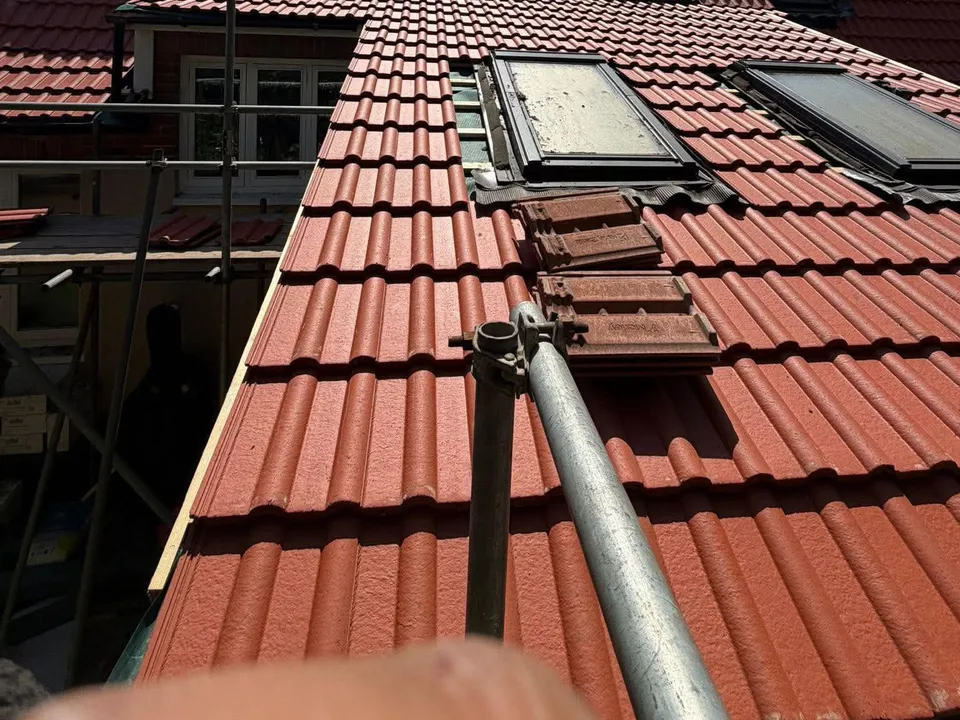
A re-roof with us means stripping the old covering back to the rafters, checking and replacing any timber that needs it, then building the roof back up with a breathable membrane, treated battens and your choice of covering: concrete or clay tiles, natural slate, or fibre cement slate where budget matters. Ridges and verges go on with modern dry-fix systems, which hold mechanically instead of relying on mortar that cracks and lets go.
The job includes the bits around the roof too. Lead flashings are renewed, and because we are bricklayers, chimney stacks can be repointed or rebuilt while the scaffold is up, which is by far the cheapest time to do it. The site is tidied every day, waste is carted away, and you get a roof that looks right from the street and stays watertight underneath.
- Stripped to the rafters, timbers checked and repaired
- Breathable membrane and treated battens throughout
- Concrete tile, clay tile, natural or fibre cement slate
- Dry ridge and dry verge systems as standard
- New lead flashings, chimney work while the scaffold is up
- Waste cleared daily, site left tidy
How It Works
Survey and options
We look at the whole roof, inside and out, and talk through coverings and what the job involves.
Written quote
An itemised price covering scaffold, materials, labour and waste. No surprises part way through.
The re-roof
Scaffold up, old covering off, membrane and battens on, tiles or slates laid and dry-fixed at ridge and verge.
Handover
A walk-round and photos of the finished roof, the site cleared, scaffold down.
New Roofs FAQs
The felt is usually the decider. If the membrane under the tiles has gone brittle and torn across large areas, every repair is temporary because water finds the next tear. Widespread nail failure and constant slipped tiles point the same way. We will tell you straight which category your roof is in, and quote a repair instead if that is the honest answer.
A typical semi takes around a week from scaffold up to scaffold down, weather permitting. Bigger roofs, slate work and chimney rebuilds add time. You get a realistic timeline with the quote, not a guess.
Ridge and hip tiles were traditionally bedded on mortar, which cracks with the seasons and eventually lets tiles come loose. A dry ridge system clamps them mechanically with screws and brackets, allows the roof to breathe, and does not need rebedding every few years. It costs a little more on day one and saves money every year after.
It comes down to the house, the street and the budget. Natural slate looks superb on older houses and lasts generations; fibre cement slate gives a similar look for less; concrete tiles are the workhorse choice. We bring samples and give you prices for each so you can compare properly.
Yes, and it is the best time to do it. The scaffold is already up, so repointing or rebuilding the stack adds a fraction of what it would cost as a separate job. We check every chimney as part of the roof survey.
New Roofs Near You
We provide new roofs across Wolverhampton and the surrounding towns. Pick your area for local details.