

Chimney Repairs in Bridgnorth
Chimney stacks repointed, rebuilt and flashed in properly by a team that does the brickwork and the roofing, not one or the other. Around fourteen miles west along the A454.
Chimney Repairs for Homes in Bridgnorth
Bridgnorth’s stacks are part of its postcard, ranks of brick chimneys over High Town’s roofline, tall Georgian flues, clustered pots against the valley sky, and the cliff-top wind gives them the hardest life in the county. Repointing in appropriate lime, rebuilding in matched brick with coursing copied, and resetting period pots are standing work here.
We cover Bridgnorth and the surrounding area: High Town, Low Town, Oldbury edge, Tasley side, Stanmore and beyond (WV16).
Get a Free Bridgnorth Quote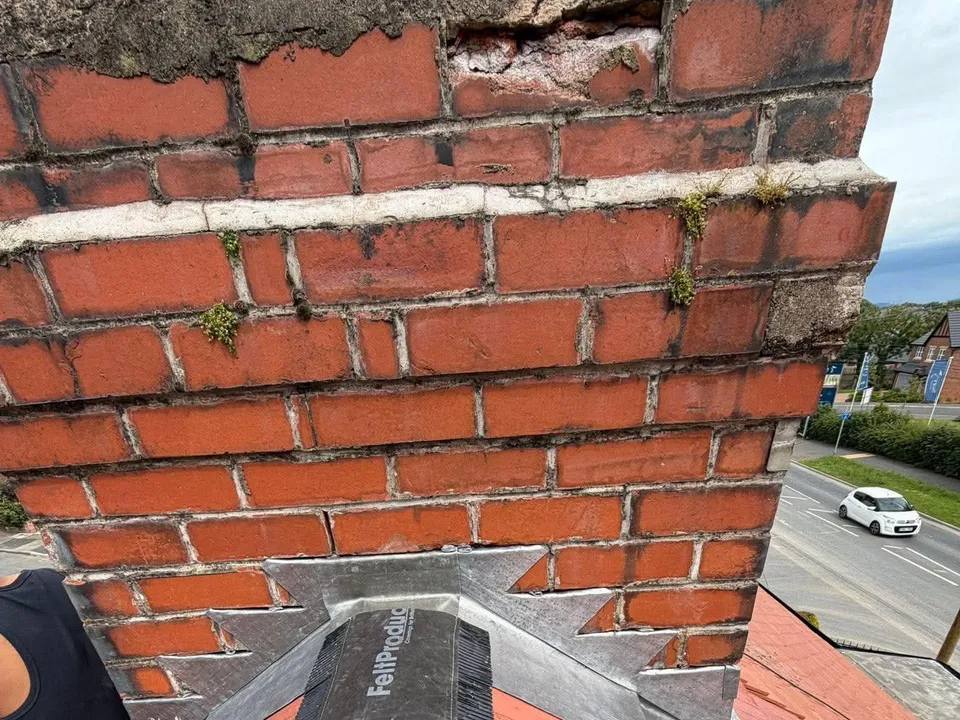
What’s Included
The sandstone footnote matters too, some stacks and gable bases meet local stone, and pointing brick-to-sandstone junctions correctly is exactly the masonry-first skill we carry. Every visible stack is treated as the townscape feature it is.
- Stacks repointed with the right mortar mix
- Full and partial chimney rebuilds in matching brick
- Lead flashing and soakers renewed, dressed into the joints
- Flaunching recast, pots reset, cowls and caps fitted
- Disused chimneys removed and tiled over
- Roofer and bricklayer on the same scaffold
How It Works
Chimney Repairs in Bridgnorth, FAQs
Attentive rather than nervous, tall old stacks flex a little, but a visible sway deserves prompt inspection of its top courses and mortar. We check it properly from access, and the spectrum runs from reassurance through repoint to planned rebuild, all honestly priced.
Yes, matched reclaimed brick, copied coursing and the right joint finish are the whole point, a rebuilt Bridgnorth stack should be indistinguishable from its neighbours except in soundness.
It can be. Stacks lean when the mortar on the weather side wears faster, and a badly leaning stack in wind is a genuine risk to whatever is below. If yours has a visible lean, get it looked at soon. Making it safe is quick; rebuilding it is planned work, not an emergency, if caught early.
Usually the lead. Flashing that has split, lifted or been bodged with mastic lets water straight in at the joint between stack and roof. Cracked flaunching on top does the same. Both are standard fixes for us, and we check all three, brick, flaunching and lead, whenever we look at a leaking chimney.
Yes, but with a ventilated cap or cowl rather than sealing it solid. A capped, ventilated flue keeps rain and birds out while letting the stack breathe, which stops damp building up inside the chimney breast. It is a small job that prevents a common problem.